Saturday, May 8, 2010

Sugar Plums, Laughter and Tears


A few days ago, my friend Andrea emailed me and inquired if I would be okay this weekend. To be honest, I read the message a few times because I didn’t fully understand why I was being asked the question. And then it clicked in that this weekend is Mother’s Day. Ironically, just today my cousin Jean asked the same question. “Will I be okay?”

Losing my mom was without a doubt the most difficult adversity I’ve ever suffered. So of course the question was valid. But here’s the thing, the challenge of living in her absence has been present every day since her passing but through God’s and her grace I cope.

I remember in grade school when I was rude and defiant to my teachers, which was rare, but when it did occur I always feared the repercussions at home. At the time I didn’t fully comprehend why, but my mother always sided with me, even when I was in the wrong.

Rather inappropriately I once stormed out of a high school teacher’s class. The following day, he called me to the front of the room and asked why I left, to which I responded, “You were getting on my nerves.” Needless to say my answer didn’t go over well. Instead of teaching, he spent ten minutes constructing a letter to the principal demanding that a parent-teacher conference be arranged. I knew such a meeting wouldn’t bode well for me and was shocked when my mother reported back. She told me she’d apologized profusely explaining that I would never behave in such a way again. To my astonishment, she continued to tell me how teachers often power tripped due to a deep-seated need for control. Her speech about me hadn’t come from a true sense of culpability about my actions but rather she had endeavored to reestablish the peace between me and this teacher. A teacher herself, she knew what she was talking about. The plan worked seamlessly and I never had (or caused) trouble with that teacher again. In some ways that was my first glimpse into the deepest depths of her love for me. She always saw a light in me even when I was in the wrong.

In the immediate days after her passing, I felt a huge disconnect with everything around me. She had literally been the conduit through which I arrived in this world. And my first taste of nourishment had come at her hand. On my first day of pre-school she was there. The first clothes I wore she purchased. Later when I was choosing a boarding school and even when I chose my college, she visited the campuses with me. She bought plants for my first apartment and explained how to prepare my first Thanksgiving dinner away from home.

My entire life had been colored by her presence and then suddenly and unexpectedly, she was gone. There isn’t a day that goes by where I don’t consider the enormous loss I feel. On some days, the sense of anguish alleviates, but it is never gone. In that regard, the arrival of Mother’s Day will hardly deviate from the other 364 days of the year. I miss her today, as I will tomorrow and for all the remaining days of my life. But there is beauty in my sorrow. The depth of emotion I feel stems from the joy of having been blessed with a mother who could show me true examples of undying and unconditional love. To my mom and to all mothers I bid you a Happy Mother’s Day.

Thursday, May 6, 2010

Out of Focus - Part One: The Root of all Evil.

Wikipedia defines “cliché” in the following way:

“A saying, expression, idea, or element of an artistic work which has been overused to the point of losing its original meaning or effect, rendering it a stereotype, especially when at some earlier time it was considered meaningful or novel.”

“Money is the root of all evil” or moreover “The love of money is the root of all evil” is bound to be in the top 25 of most popular clichés. But if Wikipedia is right, this expression, at one time, had to have held a powerful and significant meaning. What has been lost from the expression that has now rendered it “cliché?”

Before the invention of money, a system of bartering was used where goods or services were exchanged in the absence of currency. The interesting aspect of bartering, in my mind, involves the concept of usefulness. You wouldn’t give up your cow for a goat unless you really needed that goat and vice versa. In bartering, there is a stronger sense of integrity to the transaction. Both parties make the exchange because in some way they have the perception of being made better off. In fact, a barter probably wouldn’t occur unless everyone involved felt a win-win situation was taking place. And then came money.

When money enters the equation, perspectives often become blurred obscuring the concept of usefulness. When in pursuit of money, it’s not unusual for people to forgo their passions for careers they have no interest in. Take the salaries of doctors and lawyers and exchange them with what a teacher makes. I guarantee we would see a huge shift in the type of degrees pursued in college. Not because of some philosophical shift in people’s inner passions but because money is a big motivator and when dollars are involved, sense and purpose are oftentimes thrown to the wind.

In our current economy, we are all aware of how companies revere their own products and employees. When cash is at stake, even the most loyal and productive of workers can be relinquished at the drop of a hat. Or the products are compromised in order to save the bottom line. How many times have we heard of pharmaceutical companies releasing drugs they knew were dangerous? Or industrial companies that knowingly pollute the air and water all because it would be too expensive for them to do otherwise? And no, I don’t have delusions about the ways of the world. In order to operate even a non-profit must make money. But let’s celebrate businesses that add value, not pollution. Businesses that enrich rather than poison with toxic medications.

In many ways, the corporation has become a poster child for weak principles. For decades the trend has been to create disposable, cheaply made products that only last a few years. Turnover is the goal and it doesn’t matter if products aren’t durable. In fact, it’s better if they aren’t because it’s a way to keep customers circulating through a revolving door. Production and sales equals dollars even if it’s to the detriment of the environment we live in. So what if landfills are overflowing and productions processes are toxic. As long as money is being made, in the eyes of the corporation, the future is seen as bright.

These are a few reasons why the love of money is considered to be the root of all evil. The pursuit of wealth enhances qualities like greed and selfishness, transforming them into behaviors many of us regard as normal, both stereotyped and cliché.

Friday, April 16, 2010

Please Sign On The Dotted Line


Most of us think of a contract as a piece of paper such as a lease, an automotive loan or a mortgage. Typically, these are all written agreements and when signed by all parties, they are legally binding. And not to forget the verbal agreement, which is also enforceable by law but can’t be used to amend anything in writing.

But there is a third agreement that most of us never consider. The tacit agreement. Webster defines “tacit” as follows:

1 : expressed or carried on without words or speech.
2 : implied or indicated (as by an act or by silence) but not actually expressed .

While we may not be aware of it, each of us has repeatedly entered into and broken tacit agreements. The behavior is a source of arguments and discontent everywhere. Just because we didn’t write it or speak it aloud doesn’t mean we didn’t agree to it. I liken it to co-signing. Most co-signers don’t expect to honor the agreement. They’re just co-signing to provide an opportunity for someone otherwise unable to enter an agreement. In reality, a co-signer, when he or she signs on the dotted line, is also in agreement that they will abide by the terms.

A common tacit agreement, which is frequently breached of course involves exclusivity in dating. Oftentimes in the early stages of a relationship, there is an unspoken agreement of monogamy. But an opportunist, if he or she chooses, will use the fact of it being unspoken to breach the agreement and see other people. Yes, both parties assume monogamy but because it is tacit, a get out of jail free card isn’t hard to come by. Many times people like to hold off on the “exclusivity talk” because it offers a loophole to the tacit agreement.

Several years ago, I remember feeling annoyed with one of my best friends because we only spoke if I called. But the truth is this dynamic had existed for years. Looking back, I now realize I had entered a tacit agreement that I would be the one calling. I had co-signed on the unspoken dotted line and it wasn’t fair of me to be upset about something to which we had both agreed. Ironically, I tacitly changed the agreement by curtailing my calls and transforming the relationship into one that didn’t seem so one-sided.

Each of us should endeavor to look at distasteful relationship dynamics and recognize whether or not we co-signed for undesired behavior. In many circumstances we will find we have, in which case we will need to renegotiate the deal. This can be done tacitly, but is probably better when spoken. And for the real sticklers, the written agreement is always an option.

Tuesday, March 30, 2010

Don't Get It Twisted

Months ago, I decided to stop following news on health care reform. It just seemed too much of a circus. Each week, if not each day, the media flip-flopped, portraying different angles on the story. It’s going to pass. It's not going to pass. It’s going to pass. At the end of the day it was dizzying and left me with that childhood feeling of “eeny meeny miny moe.” If reform of any kind were going to occur, it seemed it would only be on the luck of a draw.

The whole debacle left me questioning our politics and more importantly our value system. How did the things we care about become so unforgivably skewed? I remember when Janet Jackson performed at the 2004 Super Bowl and exposed her breast. It turned the media on its head forcing networks everywhere to be super diligent about language and nudity.

I find it peculiar that the human form and unsavory language are such magnets for outrage, but violence is seen as completely acceptable. Just last week, I turned on the TV while eating lunch and stumbled onto the movie “30 Days of Night.” The film was nearly over, but I’d flipped to it just in time to see someone being decapitated. By American standards, images of murder and dismemberment on the airwaves [at noon] are not seen as problematic, but the sight of a nipple or the utterance of a curse word cannot be tolerated. Correct me if I’m wrong, but this seems a little backwards if not ludicrous.

Now that the health care bill has passed outraged opponents have attempted chaos with random acts of vandalism and incivility. There was even talk of death threats against democrats who had voted for the bill. Are these the actions and values of a supposed civilized world?

Before the bill’s passage, political respect, courtesy and diplomacy seemed to have flown out of the window. Consider Congressman Randy Neugebauer’s uncontrolled outburst when he yelled out “Baby Killer!” during a fellow congressman’s speech. Or even more egregious when the president was interrupted by Congressman Joe Wilson yelling out “You lie!” How do we, as a society, foster respect for one another when our political “leaders” lack it toward each other? It’s disturbing to live in a population where so many people are supportive or apathetic toward something like war, but when it comes to universal health care they become proactive and put their foot down to say no.

Not too long ago, I was engaged in a conversation about relationships and the idea was thrown out, “Is it better to be right or to be happy?” I didn’t immediately grasp the concept of this idea, but I understand it today. We sometimes become so focused on being right that we end up compromising not only the integrity of the relationship, but also of the issue at hand. No one is happy (including us) but then we grasp at straws trying to take solace in the fact that we at least proved ourselves right.

Backwards? Ludicrous maybe?

Thursday, February 4, 2010

Cracking The Shell

When I was a kid, I received some very unintentional training from my parents. They had this way of saying, “Don’t tell anyone” about events that were occurring in our lives. I remember them looking at new cars and saying, “We’re thinking of buying a car, but don’t tell anyone.” Around the same time, they wanted to rip out our back yard and install a pool. The story then became, “We’re thinking of getting a swimming pool, but don’t tell anyone.” And then the biggest “don’t tell anyone” came when I was twelve and we moved to West Africa where my father had taken a job. Years prior to that, he had discussed the idea and of course my instructions were “We’re thinking of moving to Africa, but don’t tell anyone.” For the most part, I obeyed these requests, but later resented them. These were events that also affected my life, but I was being asked to withhold them. It took me until college to realize I had grown into a secretive, young man. And it’s not that I had any secrets of note, but I had become a withholder with regard to what was going on in my life.

The irony is, years later, my mother would always tell me “You never talk.” And she was right. I could sense when she was trying to get me to open up and even though I was making an effort, I was still aware that from her point of view, it was like pulling teeth.

Luckily, this behavior never interfered with my ability to make friends, but it certainly got in the way of me forming intimate relationships on either romantic or platonic levels. For over a decade, I struggled to break out of the shell I’d formed and I’m happy to report that many years ago, I did break down many of those walls. I successfully jumped from the team of withholders and am now a proud member of “team-communicators.” And believe me, life, love and relationships of all kinds are much more fulfilling when you’re a communicator.

The more I’ve opened up, the more obvious it becomes who the withholders are. I have friends who I can talk to for an hour and still not have any idea what’s going on in their lives. These are withholders. Withholding actually requires quite a bit of energy and skill, but at the end of the day, it’s exhausting. A communicator’s life is much easier because there is no need to build walls and create smoke screens.

And withholders, no matter how good they are, should know they will rarely fool a communicator. Most communicators were at one time withholders. We know the tricks of the trade and we’re just waiting for you to tear down the walls, which only you can do. We know a withholder will never switch teams until he or she decides it’s the right time. And even then it takes a tremendous amount of work. If you are a withholder and you know it, start the work now. Give some thought to the team you’re playing on and ask yourself is it the one to which you’d like to belong?

Monday, January 25, 2010

House Of Cards

Shortly after high school, one of my good friends called to let me know she had visited a psychic. She was freaked because the woman she consulted with seemed to know so much about her personal life. At the time, and for many years to come, I was afraid of psychics. I didn’t want anyone telling me things I didn’t want to know. And there was also the question of fraudulence. Had I even wanted to see a psychic, how would I know if they were the real deal or just some charlatan trying to make a buck?

Fast forward to 2006. It was a Saturday night and I had agreed to meet my friend Tim at a popular Hollywood club. As is my M.O., I was running late, but I knew it didn’t matter. Tim is a big boy and very sociable. When I finally walked in around twenty minutes late, I found Tim talking to a group of four or five people. There were two from New York who were visiting a friend who had just moved to Los Angeles. Tim introduced me to the group and pointed out that one of his new friends was psychic. A million questions ran through my mind, but the first was, “How did Tim already find this out?” I hadn’t been that late, so clearly the cute and bubbly girl had used this information as an icebreaker.

After Tim declared, “She says she’s psychic,” I didn’t really know what to say. There was an awkward silence as I wondered how to turn this news into a conversation. The pregnant pause floated and then I rebounded with a question, “So what is it you see when you’re having a psychic episode?” I wish I could remember her answer, but the truth is I don’t. The setting seemed wrong for such a conversation. The club was fairly crowded and dark except for the laser light display. All of us were standing beside the bar, on the edge of the dance floor and the music was loud. By the time she answered, I had already judged that she was young and kooky, so I didn’t pay much attention to her response.

Eventually, Tim and I broke away and as was our custom, we closed down the club. After management had evacuated patrons from the venue, we stood outside talking. Little did I know I had received my first unofficial psychic reading. Apparently, while I was chatting with some of Tim’s new acquaintances, the psychic girl had informed him that there was an extremely dark energy going on with me, so much so that she asked Tim not to mention it. For some reason, she thought there was something going on with my grandfather (or that he had just died), but both of my parents’ fathers had passed away decades before my birth. I must admit I was annoyed and dismissed everything the girl said as trickery and buffoonery. I told Tim she was probably just using the conversation to flirt with him. Later, when Tim and I finally parted ways, I drove home thinking this is why I never wanted to see a psychic, for fear of being told something negative.

About a year later, I was visited by darkness and negativity. First, I was diagnosed with a rare form of thyroid cancer and while I was battling it, my mother passed away. In many ways I felt as if I had been thrown into the abyss. And the memory of Tim recounting the young girl’s story resurfaced. I wondered if this was the darkness she had (fore)seen.

In October of last year, on the recommendation of a friend, I sent my birth date to a reader of tarot. I never heard back from him nor did I reach out to him again. And then last Thursday, I received a call from the reader apologizing for taking so long. He had suffered a lot of personal problems and my reading had fallen off of his priority list. As such he had repeated another reading just before calling me. It is funny how the universe works. Just that week, I was suffering through quite a bit of personal turmoil and his call could not have come at a better time. Amazingly, he began to describe the exact situation that was causing me anguish and proceeded to talk in specifics about other issues that were going on in my life. At one point I was almost shaking from his accuracy. At the end of the call, I felt more peaceful and I thanked him for taking so long to get back to me. In some way, the reading of my cards had created order in the chaos.

For over a year now, I have had a deck of tarot cards at my house. I have two books on how to read them, but my study of them wasn’t all that eye opening. The main thing I do remember from one of the books is that tarot can be used to make sense of all of the chaos. And certainly all of us can use a little of that.


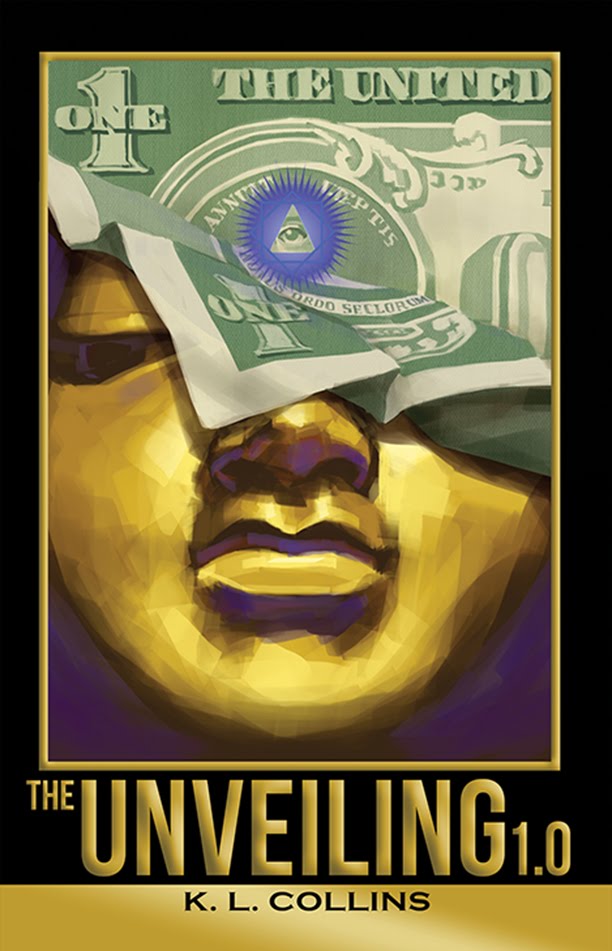
TO LEARN MORE OR TO READ AN EXCERPT

of my sci-fi/fantasy/adventure novel, “The Unveiling: 1.0,” please visit TheUnveilingSeries.com.

Monday, January 18, 2010

Sticks And Stones And Broken Bones

Over the holidays I had friends visiting from Paris. Unfortunately, they flew in on the eve of Atlanta’s first winter snowstorm. At most there was maybe an inch of accumulation, which immediately began to melt. But this is where the real problem began. The combination of melting snow and freezing temperatures meant ice was forming to create extremely hazardous sidewalks and roads.

The following day, and against my better judgment, I ventured out with my guests. It was extremely cold, but sunny. Even though temperatures were well below freezing, the sun managed to dissolve much of the ice. The highways were fairly open and surprisingly safe. My first thoughts were it’s not as bad as I imagined, but that was only until we reached downtown. Because there are much taller buildings there, many of the streets are caught in the shadows of the skyscrapers around them. To my dismay, these streets were covered in ice. At one point, I turned the car off of a perfectly clear street not realizing the block I was turning onto was slick with black ice. The car began sliding even though I had firmly applied the brakes. Luckily I was able REto coast down into an area where I regained traction. I tried paying closer attention and successfully parked at our intended destination – The Georgia Aquarium.

This is where the real trouble started. Once we left the parking structure, we found ourselves surrounded by a thin layer of snow and ice. We tiptoed ever closer to the aquarium entrance and then, when we were just across the street, one of my friends slipped and fell. As I watched, I prayed that she hadn’t hurt herself, but her face twisted in pain. The first words out of her mouth were “I really hurt my arm,” and when she pulled up her sleeve, I had a sinking feeling. The contours of her right arm (and she is right handed) were slightly off.

We gathered her up as she grimaced. The impact of the fall hadn’t seemed terribly bad, so each of us began speculating as to what could have happened to make her arm appear quite so tweaked. Maybe she had dislocated her wrist (is this possible?) We wanted it to be something simple or at least less severe than a break, but in my gut I have to admit I felt it was broken.

RECEIVING HEALTHCARE IN THE U.S. SYSTEM
After several hours in the ER, we were informed that Camille had indeed broken her arm just above the wrist. It is a sensitive area, which can affect the mobility of the hand. The important thing was getting her the care she needed, but the issues of our current healthcare system came to light. Camille is French and receives her healthcare through the French system. She did not have travel insurance and was therefore not armed with any kind of policy that would cover her care under the American system.

As we all know, Obama is struggling to reform healthcare in the U.S. When I hear people fighting against reform, I fear they have never needed serious care, which I have unfortunately needed in the past. Through my own experiences, I have witnessed first hand how ridiculous and unpleasant our current system can be. Should anyone think we are not in need of reform, I am here to say you stand corrected.

Imagine how disheartening it is to be suffering from a serious illness and have the first question asked of you, “do you have insurance?” Each time we are handed a clipboard of paperwork and asked to sign on the dotted line as a promise to pay should our insurance companies choose not to. The protocol demonstrates what the main focus of our industry is; the almighty dollar and the bottom line. Psychologically, it doesn’t instill confidence. The inherent message is that the actual care is secondary to primary financial concerns.

And what makes our current system even more ridiculous is that no one (but the insurance companies) seems to understand what the actual prices are. In the past six months, I have had various lab work done. At the end of these visits, I was sent to a cashier to settle my charges. Each time, I was shown a breakdown of services rendered and it was then explained to me what portion I was responsible for. I was flabbergasted as, on some occasions, I was asked to pay upwards of $400. I always opt to be billed because the actual invoices never correspond to the figures given to me at the cashier. Without fail, they have always been a fraction of what I was originally asked to pay. Apparently, even the actual providers are unaware of the discounts negotiated by the insurance companies, meaning their calculations and the insurance companies’ rarely correspond. Truthfully, I have no idea how today’s politicians are calculating the supposed costs of healthcare when our very own health professionals don’t know really know the numbers.

While my friends were visiting, I felt envious of their system. Rarely are they asked to pay anything when injured or ill and they aren’t made to feel that their ability to pay has bearing on the quality of care they will receive. And when they do have to pay something, it is generally a small and well known, quantifiable amount.

I hope one day our system can be reformed so a patient’s care will be the primary focus rather than how it will be paid for. As long as our system is seen as a lucrative venture for doctors and insurance companies rather than a healing one for patients, it will ultimately be the patient who suffers.


I HAVE WRITTEN A BOOK! TO LEARN MORE OR TO READ AN EXCERPT

of my sci-fi/fantasy/adventure novel, “The Unveiling: 1.0,” please visit TheUnveilingSeries.com.